
Let’s start with how I’ll be building my Thai script curriculum. This curriculum is designed for my first semester, which will last two months—August and September. My second semester will be October – December.
Set 1: What’s the Motivation?
The first thing I did was identify why I wanted to learn Thai and whether that reason was strong enough to keep me going when the excitement inevitably faded.
My biggest motivation is being able to understand the Thai dramas I’ve been watching for the past eight months. I can already see myself watching even more Thai dramas in the years to come, and I’d love to understand them without relying on subtitles. I also plan to visit Thailand in the near future, which gives me another meaningful reason to learn the language.
If your motivation isn’t immediately clear, think back to what first sparked your interest in Thai. What drew you to the language in the first place? Your reason doesn’t have to be extraordinary—it just needs to be meaningful enough to keep you coming back.
If you’re learning Thai simply because you want to learn another language, that’s perfectly valid too. Your progress may be slower without a specific goal driving you, but that doesn’t mean you should give up. Every step forward is still progress.
Get Started: Learn Basic Intro Phrases
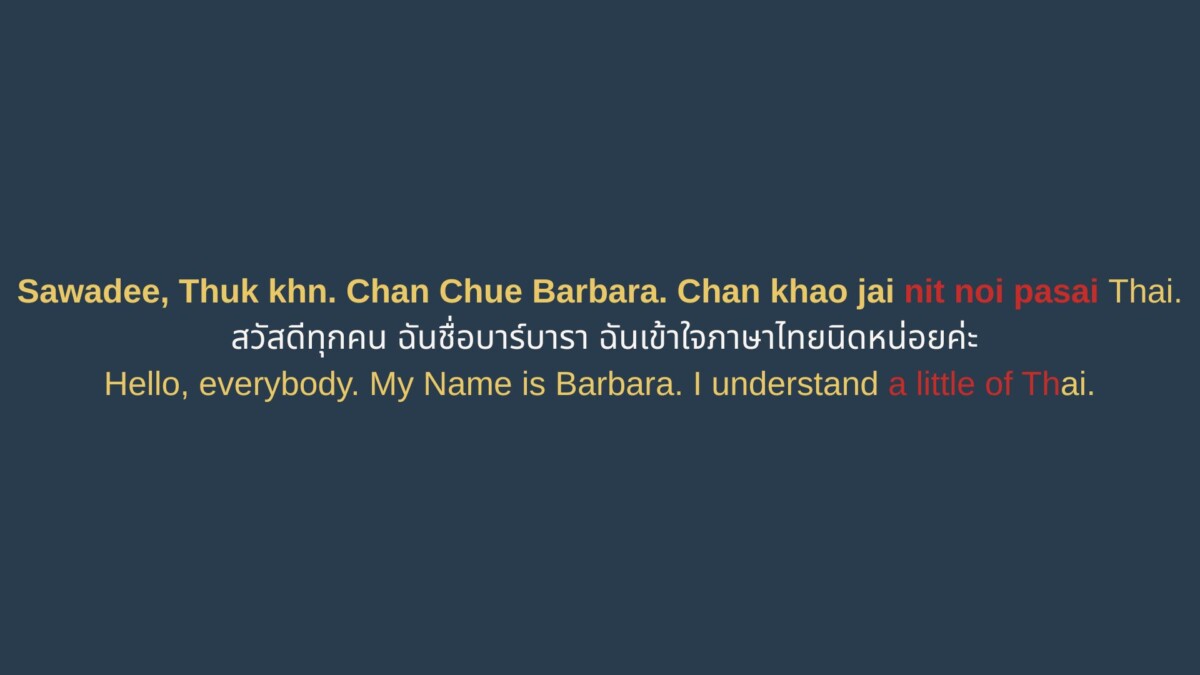
As I work through this learning process, I’ll color-code my Thai writing to track my progress:
- 🔴 Red: Words I had to look up.
- 🟡 Yellow: Words I remember but can only write in romanization.
- 🟢 Green: Words I can confidently write in Thai script.
This system will help me visualize my progress over time and quickly identify the areas that need more practice.
My first Thai video in my Basic Learning Process:
I loved this video starting off that this channel will be my resource learning new words.
Learn Thai Script and Tone Marks
Don’t think of this as a step-by-step process where you master one thing before moving on to the next. Instead, think of it as a progressive learning journey where you’re constantly building multiple skills at the same time.
For example, learning the Thai script without learning vocabulary isn’t very helpful. You’ll recognize letters, but you won’t understand what you’re reading.
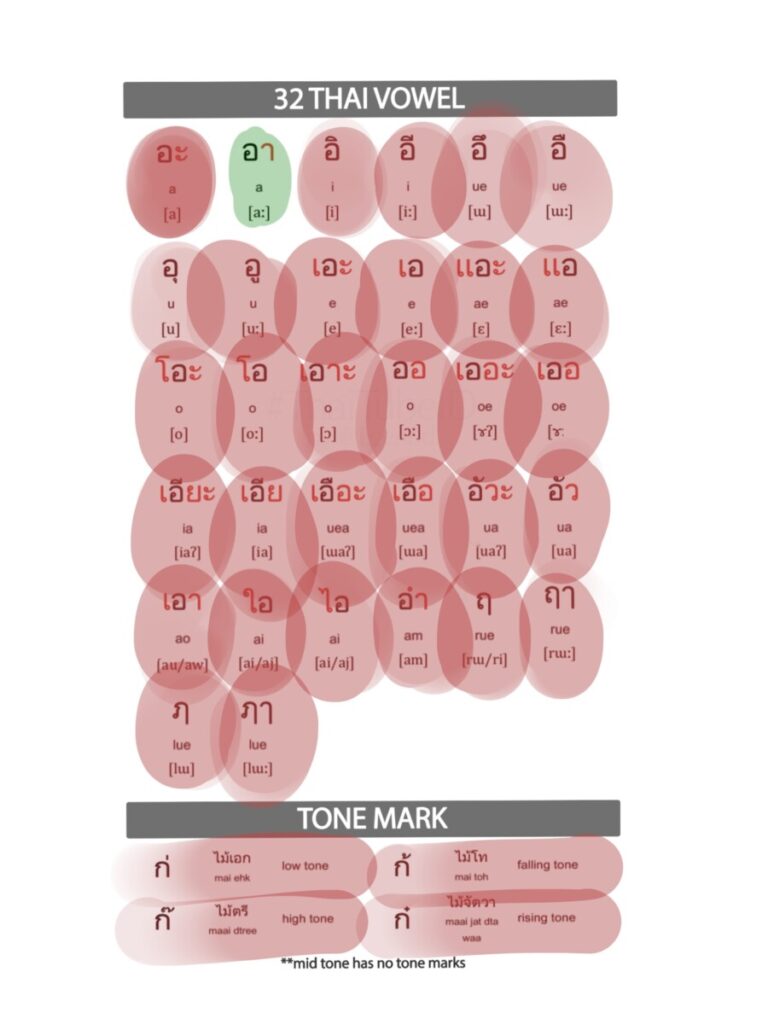
Thai has 44 consonants and 32 vowels, and yes—it can feel overwhelming at first. I’m still working through it myself. However, learning to read and write in Thai script will dramatically improve your speaking, listening, and overall comprehension.
One of the biggest lessons I’ve learned is that Thai is a tonal language. Because of that, romanization often doesn’t accurately show how a word is actually pronounced. On top of that, there isn’t one official romanization system that everyone uses, so you’ll often find the same Thai word spelled several different ways in English.
That’s why I recommend prioritizing the Thai script from the very beginning. As you build your vocabulary, learn to read and write each new word in Thai script rather than relying on romanization. It may take more effort upfront, but it will make pronunciation, reading, and listening much easier in the long run.
My Current Progress with Thai Script
- 🔴 Red: I cannot recognize
- 🟡 Yellow: I’m familiar, but it is hit or miss
- 🟢 Green: I know this one when I hear it I can write it and I can read it when I see it
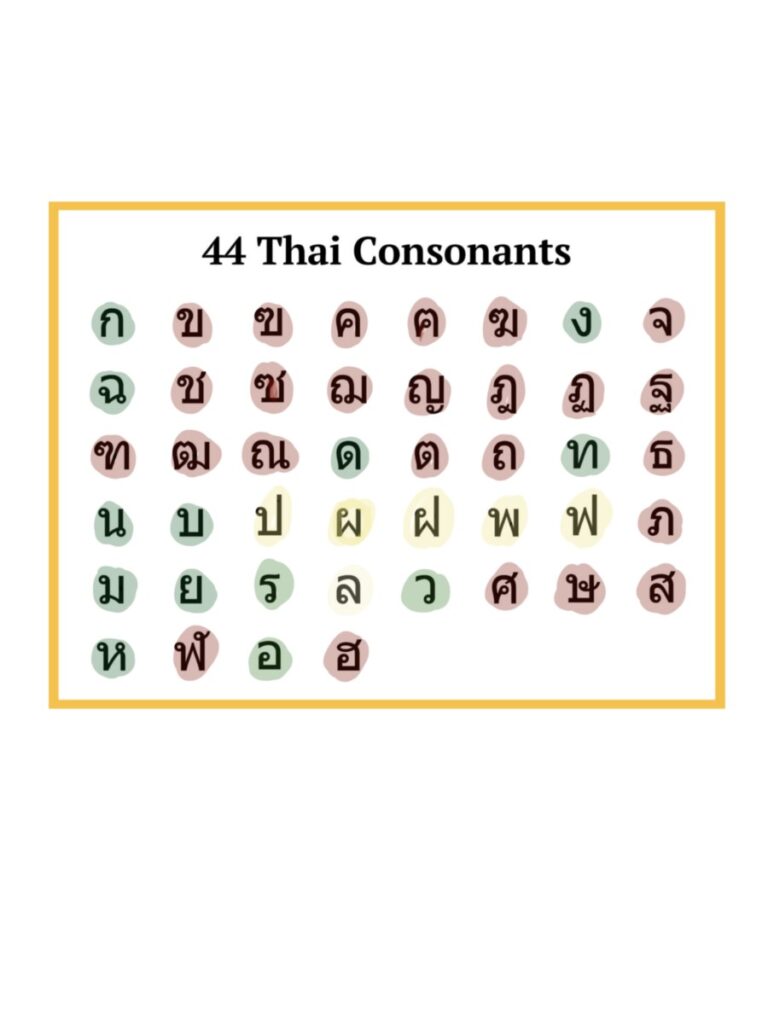
To learn Thai Script, I use an app called Learn Thai.
Pronouns, Top Verbs, Question Words
To start speaking Thai, you first need to build your vocabulary. As you collect more words, you’ll be able to combine them into simple sentences by following basic grammar rules. Over time, those simple sentences will grow into more natural conversations. Speaking isn’t about memorizing thousands of words—it’s about knowing enough vocabulary to express your thoughts and understanding how to put those words together.



Rules of Thai Script Grammar
If you want to start building sentences, you’ll need to learn some basic grammar rules. Grammar provides the structure that allows you to combine words into clear, meaningful sentences.
Flashcards
I use the app Anki because it gives me the flexibility to study the way that works best for me—and it’s free. One of my main goals was to find a resource that didn’t require a subscription and still felt like using physical flashcards. So far, Anki has done exactly that, making it easy to review vocabulary and track my progress at my own pace.
One app to follow a curriculum
I use the app Ling as a structured learning path that allows me to complete quick five-minute lessons whenever I have time. It covers a variety of key vocabulary words and helps me build a foundation while progressing through the language at my own pace.
My Next Steps:
Learn Thai Through Music 🎵
Choose Thai songs that I genuinely enjoy and make them part of my routine. Learn the lyrics, translate the meaning, practice pronunciation, and eventually sing along without looking at the words.
Goal: Learn 1–2 songs per semester.
Watch Thai Dramas Actively 🎬
Since Thai dramas are my motivation, I’m turning watching into a learning activity instead of only entertainment.
- Watching an episode with English subtitles first
- Rewatching favorite scenes with Thai subtitles
- Writing down repeated phrases you hear
- Learning common expressions from your favorite characters
Goal: Collect phrases I actually hear in real conversations.
Create a Thai Journal 📖
Start small.
Beginning with:
- My daily routine
- What I ate
- My feelings
- MY plans for tomorrow
- A short description of my day
Example:
- วันนี้กินข้าว (Today I ate rice.)
- ฉันชอบดูละครไทย (I like watching Thai dramas.)
Goal: Build confidence writing in Thai script.
Follow Thai Creators Online 📱
Use social media as a mini immersion tool.
Follow:
- Thai vloggers
- Actors I enjoy
- Cooking channels
- Travel creators
Training my ears to recognize sounds and rhythm.
Use Shadowing Practice 🗣️
Pick a short clip from a drama, song, or video.
Process:
- Listen once
- Repeat with the speaker
- Copy their tone and pronunciation
- Record yourself
- Compare
This is especially helpful because Thai is tonal.
Make a Thai “Word Collection” ✨
Instead of only memorizing random vocabulary, collect words connected to your life.
Categories:
- Things you say often
- Words from dramas
- Favorite foods
- Emotions
- Travel words
- Words you keep forgetting
Create Mini Challenges 🎯
Make learning feel like a game.
Examples:
- Learn 50 Thai words in a month
- Write your name and sentences in Thai script
- Understand one scene without subtitles
- Order food in Thai during your trip
- Have a 5-minute conversation
So here is my goal for this Semester:
August–September Goals:
Learn Thai alphabet basics
Build a 200–300 word vocabulary bank
Learn 1 Thai song completely
Watch Thai dramas actively (collect phrases)
Write simple Thai sentences weekly
Practice speaking through shadowing
Leave a Reply